
3 things to watch in the new MITRE ATT&CK Enterprise 2026 update
Topic: MITRE’s latest ATT&CK update, what changed and why it matters
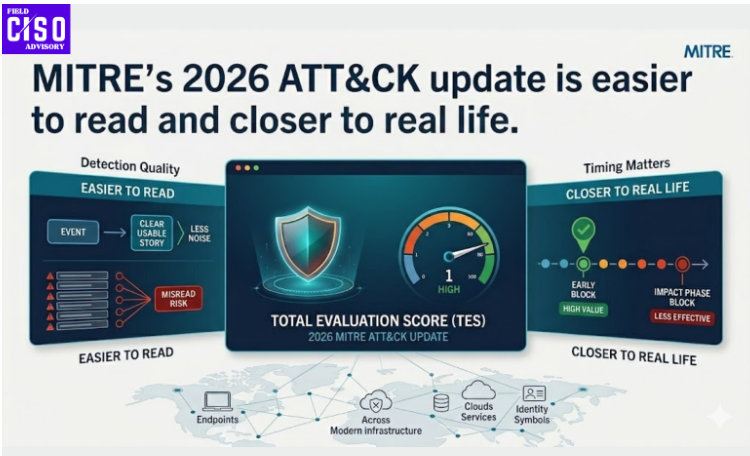
Most security evaluation results are easy to ignore. They sound important, but are generally outdated for the current scenario and thus, do not really change how buyers or defenders make decisions.
MITRE Enterprise Evaluations have always been the most relevant and trustworthy 3rd party evaluation since 2018 and it is being updated every year to adapt with the evolving threat landscape and attack surfaces.
The new MITRE ATT&CK Enterprise 2026 is no different. In my opinion, the 2026 update is a big transformation in aligning the test with the real SOC scenarios and environment.
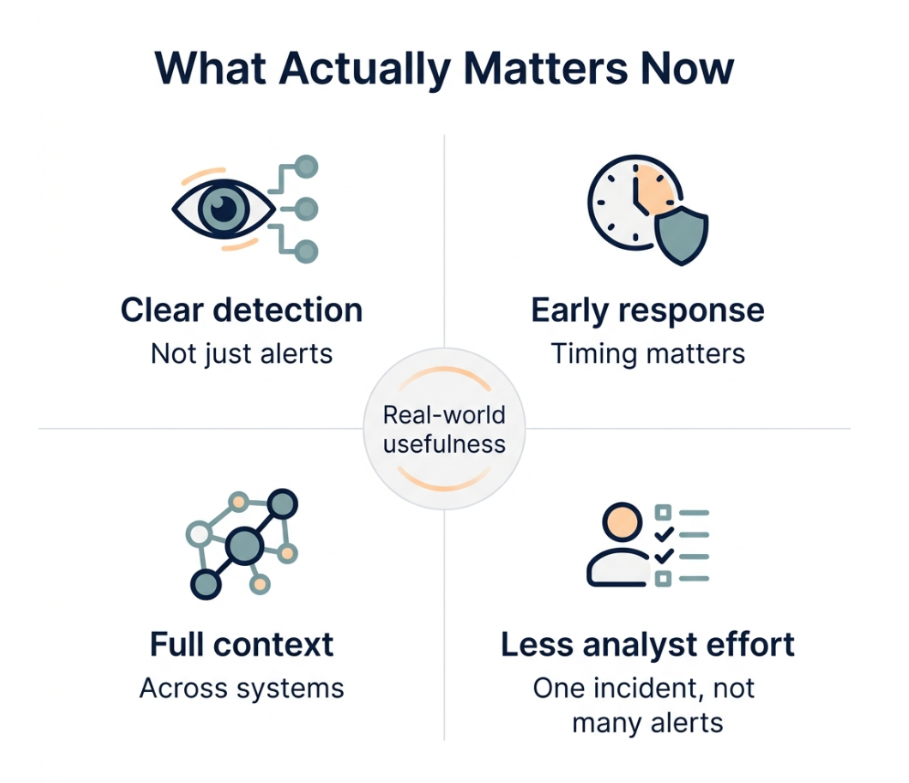
The simplest way to think about it is this: the update is trying to measure whether a tool is genuinely useful during an attack, not just whether it can produce alerts. That is a meaningful shift for both CISOs and technical teams. A CISO wants to know whether risk is going down. A SOC analyst wants to know whether the alert is clear enough to act on. This update is trying to bring those two views closer together.
1) One score, many types of solutions
The new Total Evaluation Score, or TES, gives readers a faster summary of performance. This helps leadership teams quickly understand the broad result without going line by line through every ATT&CK technique.
A related big change is that different types of security offerings will now be easier to review under the same broader evaluation structure. EDR, XDR, SIEM, MDR, MSSP, AI-assisted SOC models, identity, cloud, and endpoint security can be looked at together instead of being treated as completely separate buying conversations.
But the score should not be read alone. MITRE will also show how the result was achieved, whether mainly through the platform itself, analysts, AI support, or a mix. That matters because two vendors can look similar at the score level but require very different levels of effort from your own SOC team.
Simple example:
A lean security team may compare an MDR service with an XDR platform because both could help improve detection and response.
A larger SOC may compare SIEM integration, endpoint coverage, and cloud visibility because it already has people and processes in place.
The value is that customers can now look at these options together, while still checking the operating model behind the result.
2) Incident view matters more than alert volume
One of the most practical changes is the focus on useful incident views instead of raw alert volume. More alerts do not automatically mean better detection. In many SOCs, more alerts simply mean more noise.
A product is more useful when it connects attacker activity into a clear story. Analysts need to know what happened, where it happened, how serious it is, and what to do next. A long list of disconnected alerts may technically show coverage, but it does not always help the team respond faster.
Simple example:
During a ransomware-style incident, one tool may raise 20 separate alerts for login abuse, scripting activity, remote access, and data staging.
Another tool may show fewer alerts but connect them into one incident view. Most analysts would prefer the second experience because it saves time and makes the attack easier to understand.
3) The scenarios and environment look closer to real attacks
The new round focuses on scenarios that look more like what many enterprise teams face today. One scenario is based on financially motivated activity, often starting with social engineering or stolen credentials. Another reflects a broader espionage-style intrusion across a larger enterprise setup.
The test setup is also broader. It spans endpoint, cloud, identity, email, Windows, Linux, and hybrid enterprise components. This matters because modern attacks rarely stay in one place. A stolen account may first look like an identity issue. A few minutes later, it may become lateral movement, remote access, and access to sensitive data.
Simple example:
If a product only sees the endpoint but misses the cloud activity, the story is incomplete.
If another product connects the login, device activity, cloud access, and data movement, it gives the team a much better picture of the incident.
How to use MITRE evaluations
When the public results are available, do not stop at the headline score. Use the score as a starting point, then look deeper.
Ask practical questions:
- How quickly was the attack detected?
- Was the activity connected into a clear incident, or shown as scattered alerts?
- Did the solution reduce analyst effort?
- Was the response mostly autonomous, analyst-driven, AI-assisted, or service-led?
- Did the product help early enough to matter?
- Was the result aligned with how your own SOC actually operates?
This is where MITRE evaluations become most useful. They should not be used only to crown a winner. They should help security teams understand which solution fits their environment, staffing model, risk profile, and response expectations.
For a CXO, that means looking at whether the product can reduce business risk in a realistic attack. For a SOC leader, it means checking whether the tool improves speed, clarity, and workload. For an analyst, it means asking whether the product gives a usable story or just adds more alerts.
That is the real value of this update. It helps move the conversation from “who scored highest” to “who will actually help us respond better when an attack happens.”
Did you find this article helpful?
Let the authors know by leaving a like or comment.
No comments yet
Be the first to share your thoughts!
